khaganate · ≈ 744 – 840
Uyghur Khaganate
ئۇيغۇر خانلىقى (ئورخۇن)
The Uyghur khaganate that built towns on the steppe, made Manichaeism the religion of its court and sent its horsemen to win back the Tang capitals from the An Lushan rebels.
When the Kyrgyz destroyed it in 840, Uyghurs moved to Turfan and Gansu and founded new kingdoms. Its capital was Ordu-Baliq (today Karabalgasun, Mongolia) in Mongolia (744–840).
How did nomads become builders of cities?
Through silk, Sogdians and a new faith. After 744 the Uyghur khagans did what Tonyukuk had warned the Türks never to do. They built Bay Balïq on the Selenge and the walled capital Ordu Balïq on the Orkhon; an Arab traveller later described the khagan's tent of gold pitched on top of his castle. The money came from the Tang: Uyghur horsemen saved the dynasty from An Lushan in 757, and for decades afterwards the Uyghurs sold horses at about forty bolts of silk each. The Sogdians ran that trade and gave the Uyghurs much more: the script in which they wrote their own language, an administration for ruling both herders and oasis towns, and Manichaeism, which Bögü Khagan made the court religion around 762–763.
Millward reads the choice as deliberate: remembering how the Tang had absorbed the Eastern Türks, the Uyghurs took their model of state from the Sogdians, not from China. In 809 the khagan even asked the Tang to write the people's name with new characters, 回鶻, meaning 'swift as a falcon'.
Sources: James A. Millward, Eurasian Crossroads: A History of Xinjiang (London: Hurst, 2007) · Jiu Tangshu (Old History of the Tang), chapter 195: Huihe (the Uyghurs), Chinese original on Wikisource · Toshio Hayashi, “Karabalgasun i. The Site”, Encyclopaedia Iranica (2010)
How did it end?
In 840 the Kyrgyz from the upper Yenisei destroyed the capital and scattered the tribes. Some fled south into China, some to the Gansu corridor, where they founded the kingdom of Ganzhou (today Zhangye), and others to Beshbaliq and the Turfan oasis, where the Idiqut kingdom of Qocho (today Karahoja, near Turfan) grew up. Those emigrants are among the ancestors of today's Uyghurs, though Millward reminds us that they were only one part of them. The khaganate had begun in 742–744, when the Uyghurs, Basmils and Qarluqs overthrew the last Türk khagan and the Uyghur leader Qutlugh Bilge Kül made himself khagan.
Sources: James A. Millward, Eurasian Crossroads: A History of Xinjiang (London: Hurst, 2007) · Jiu Tangshu (Old History of the Tang), chapter 195: Huihe (the Uyghurs), Chinese original on Wikisource
Events
- 744The Uyghur Khaganate is foundedfounding
- 757Uyghur horsemen help retake Chang'an and Luoyangbattle · Xi'an
- ≈ 757Bay Balïq is built on the Selengefounding · Selenga
- ≈ 762The Uyghur khagan becomes a Manichaeanconversion · Ordu-Baliq
- 779Bögü Khagan is killed by his ministerevent
- 790The Tibetans take Beshbaliqbattle · Beshbaliq
- 798The Uyghurs fight at Kuchabattle · Kucha
- 840The Kyrgyz drive the Uyghurs from Mongoliafall · Turfan
- ≈ 840Uyghurs settle in Ganzhoumigration · Zhangye
- ?The legend of the tree-born Uyghur kingsfounding
Sources (3)
- James A. Millward, Eurasian Crossroads: A History of Xinjiang (London: Hurst, 2007) · cited only
- Jiu Tangshu (Old History of the Tang), chapter 195: Huihe (the Uyghurs), Chinese original on Wikisource · public domain
- Toshio Hayashi, “Karabalgasun i. The Site”, Encyclopaedia Iranica (2010) · cited only
Years are approximate; they will be checked against a second source.
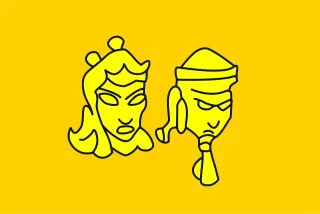
Flag of Uyghur Khaganate: Kirsehirlitv · CC0 · Wikimedia Commons
