ruler · 1487 – 1533
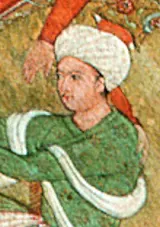
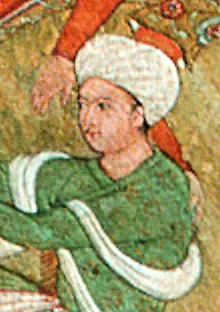
Sultan Said Khan
سۇلتان سەئىدخان
The Moghul prince who took Kashgar in 1514 with Mirza Haidar and founded the Yarkand Khanate, and who died of altitude sickness coming back from a campaign in Tibet in 1533. As a young man he had been a prisoner in Andijan and later lived with Babur at Kabul.

Life and works
- 1487BornSultan Said Khan
- 1514foundingSultan Said Khan takes KashgarThe founding of the Yarkand Khanate, which ruled the Tarim for a century and a half.
- 1533eventSaid Khan dies on the way back from TibetA khan killed by the mountains.
- 1533DiedSultan Said Khan
How did a hunted prince come to found a state?
For twelve years almost everything went wrong for him. At about fifteen he was wounded at Akhsi in the war with the Uzbek Shaybani Khan and spent a year in prison. At sixteen he escaped from Samarkand with seventeen companions. His uncle Sultan Mahmud Khan caught him and kept him under guard; his brother Mansur Khan defeated him; the Dolans of the Tarim, whom he asked for soldiers, attacked him instead, and he got away on a single horse. Buğra counts the moment when only five or six men were left with him, with the Uzbeks to the west, Mansur to the east and the Dughlat ruler Abu Bakr to the south.
Caught again in Andijan, he was let out by a governor who secretly sided with him, and late in 1509 he reached his cousin Babur in Kabul. With Babur's help he took Ferghana; when the Uzbeks pressed again in 1514, he left it with about ten thousand people of the Chaghatay, Kurkan and Dughlat houses, crossed to the Tarim and took Kashgar and Yarkand from Abu Bakr. A week later, on 20 September 1514 by Buğra's reckoning, a kurultay raised him on white felt as khan, and Yarkand became the capital of a state that lasted 170 years.
Sources: Mehmet Emin Buğra, Şarkî Türkistan Tarihi (1940), in Abdullah Oğuz, Şarkî Türkistan Tarihi: Metin Tenkidi, Türkiye Türkçesi ve İnceleme, MA thesis, İstanbul Üniversitesi (2020) · Mirza Muhammad Haidar Dughlat, The Tarikh-i-Rashidi: A History of the Moghuls of Central Asia, tr. E. Denison Ross, ed. N. Elias (London, 1895)
How did he make peace with his brother?
Mansur Khan held Kucha, Turfan, Beshbaliq and the upper Ili and did not recognise him. Said did not march on him. First he won over their younger brother, whom Mansur had left in Kucha with most of his army; then, early in 1516, the two khans agreed to meet between Aksu and Bay. Mansur feared revenge for the battles of their youth and asked for hostages, so each side handed over members of the royal family, Mirza Haidar among them. Thirty men rode with each khan; the armies stood in sight of each other.
In the tent with two thrones, Said Khan spoke first: the pain of their quarrels, he said, would be made good by this show of unity. Mansur answered that although he was the elder in years, Said was his elder in rank. Mansur recognised Said as great khan; Said left Mansur and his heirs to rule the east on their own. Millward calls the arrangement a rare episode of stability, and quotes the Tarikh: from this peace a man could travel alone from Hami to Ferghana without provisions and without fear.
Sources: Mehmet Emin Buğra, Şarkî Türkistan Tarihi (1940), in Abdullah Oğuz, Şarkî Türkistan Tarihi: Metin Tenkidi, Türkiye Türkçesi ve İnceleme, MA thesis, İstanbul Üniversitesi (2020) · James A. Millward, Eurasian Crossroads: A History of Xinjiang (London: Hurst, 2007)
How did he die?
On the way home from his last war. In 1532 Mirza Haidar and his uncle, the chief emir Sayyid Muhammad, talked him into a campaign over the Karakoram into Ladakh, Baltistan and Kashmir; his heir Abdurashid argued against it. Kashmir's capital was taken and its rulers agreed to read the Friday sermon and strike coins in Said Khan's name. The khan himself had suffered badly from the thin air on the way up.
In the summer of 1533 he turned back towards Yarkand. Mirza Haidar, who was still in Tibet, tells what the last letter from the camp reported: after the glacier passes his condition grew much worse, and the nearest place free of the sickness, dam-giri, was eight days away. The emirs decided to hurry, and instead of building a litter they set the weak khan on his horse and held him up on every side. They covered eight days' road in four; three farsakhs short of lower ground he died, on 9 July 1533, at forty-seven. Elias places the spot on the Suget pass, about 18,000 feet high. His body was carried to Yarkand and buried in the palace garden; a note in Buğra's history identifies the grave with today's Altun Mazar, the name long given to royal tombs in East Turkistan.
Sources: Mirza Muhammad Haidar Dughlat, The Tarikh-i-Rashidi: A History of the Moghuls of Central Asia, tr. E. Denison Ross, ed. N. Elias (London, 1895) · Mehmet Emin Buğra, Şarkî Türkistan Tarihi (1940), in Abdullah Oğuz, Şarkî Türkistan Tarihi: Metin Tenkidi, Türkiye Türkçesi ve İnceleme, MA thesis, İstanbul Üniversitesi (2020)
Sources (4)
- Mehmet Emin Buğra, Şarkî Türkistan Tarihi (1940), in Abdullah Oğuz, Şarkî Türkistan Tarihi: Metin Tenkidi, Türkiye Türkçesi ve İnceleme, MA thesis, İstanbul Üniversitesi (2020) · cited only
- Mirza Muhammad Haidar Dughlat, The Tarikh-i-Rashidi: A History of the Moghuls of Central Asia, tr. E. Denison Ross, ed. N. Elias (London, 1895) · public domain
- James A. Millward, Eurasian Crossroads: A History of Xinjiang (London: Hurst, 2007) · cited only
- Wikidata · cited only
Years come from Wikidata only and are not yet checked against a second source.