empire · ≈ 180 BC – 60 BC
Xiongnu (Asian Huns)
ھۇنلار (ئاسىيا ھۇن ئىمپېرىيەسى)
The steppe empire that first brought the oasis kingdoms of East Turkistan under one power: from a 'Commandant of Slaves' posted near Karashahr it taxed the small states and took their grain and men, until the Han drove it out of the Tarim around 60 BCE.
Buğra counts the Huns as the great Turkic union that the region joined between 206 and 180 BCE under Mete (Modu); Chinese histories call them Xiongnu. Their rule over the oases began in the late 3rd or early 2nd century BCE; when exactly is disputed.
How did the Huns rule the oases?
Lightly, and for profit. Buğra writes that the rulers of the 36 oasis states submitted to Mete and kept their internal independence. The Book of Han says the Xiongnu king who oversaw the west set up a 'Commandant of Slaves' who lived between Karashahr and its neighbours, taxed the states and grew rich on them. Millward places this office by Lake Baghrash (Bosten) and says it levied taxes and labour from Loulan and the other Tarim cities. For the Huns the oases, above all Jushi in the Turfan basin, were a source of grain, men and tribute.
Buğra adds a detail of pride: the Hun ruler, the tanrıkut, wrote to the Chinese emperor as 'the great tanrıkut of the Turkic khans, enthroned by heaven and earth, by sun and moon'. Chinese histories describe them as nomads following grass and water, but archaeologists have found Xiongnu houses, fortifications and fields from Manchuria to Dzungaria.
Sources: Hanshu (Book of Han), chapter 96A: the Western Regions, Chinese original on Wikisource · James A. Millward, Eurasian Crossroads: A History of Xinjiang (London: Hurst, 2007) · Mehmet Emin Buğra, Şarkî Türkistan Tarihi (1940), in Abdullah Oğuz, Şarkî Türkistan Tarihi: Metin Tenkidi, Türkiye Türkçesi ve İnceleme, MA thesis, İstanbul Üniversitesi (2020)
How did they lose the Tarim?
In a sixty-year tug of war with the Han. After decades of paying the Huns off with silk, wine, grain and princesses, the Han emperor Wudi went to war to 'cut off the Xiongnu's right arm', the oases. He sent Zhang Qian to look for allies; the Huns held him for ten years. From about 120 BCE the two powers fought over the Tarim, and the oasis kings sent hostages to both: Loulan did, until a Han envoy had its king stabbed at a banquet. In 60 BCE, amid quarrels among the Huns, the king who oversaw the west went over to the Han, and the Han Protector-General replaced the Commandant of Slaves. What that date means for the region is itself disputed. In the 1st century CE the Huns came back, until Ban Chao drove them out again.
Sources: James A. Millward, Eurasian Crossroads: A History of Xinjiang (London: Hurst, 2007) · Hanshu (Book of Han), chapter 96A: the Western Regions, Chinese original on Wikisource · Mehmet Emin Buğra, Şarkî Türkistan Tarihi (1940), in Abdullah Oğuz, Şarkî Türkistan Tarihi: Metin Tenkidi, Türkiye Türkçesi ve İnceleme, MA thesis, İstanbul Üniversitesi (2020)
Events
Disputed · views side by side
Since when did the Huns rule East Turkistan?
The view Tarixim follows
206 BC – 180 BC
Buğra: between 206 and 180 BCE all the khans of East Turkistan became subjects of the Hun emperor; after Mete defeated the Wusun, the rulers of the 36 states, Kashgar, Yarkand, Khotan, Aksu, Kucha, Karashahr, Loulan and Qocho first among them, submitted and kept their internal independence.
Mehmet Emin Buğra, Şarkî Türkistan Tarihi (1940), in Abdullah Oğuz, Şarkî Türkistan Tarihi: Metin Tenkidi, Türkiye Türkçesi ve İnceleme, MA thesis, İstanbul Üniversitesi (2020)
175 BC
Millward: Hun dominance was made formal in the first half of the 2nd century BCE, when the Xiongnu drove the Yuezhi from the Gansu corridor (175 BCE) and then attacked them in northern Xinjiang (162 BCE).
James A. Millward, Eurasian Crossroads: A History of Xinjiang (London: Hurst, 2007)
220 BC
Ömer Kul, citing Kazakbalası: the Hun empire ruled East Turkistan from 220 BCE to 216 CE.
Ömer Kul, Osman Batur ve Doğu Türkistan Millî Mücadelesi (1941–1951), doctoral thesis, İstanbul Üniversitesi (2009)
The other views are shown with their own sources.
Disputed · views side by side
When did the Huns lose the Tarim oases?
Most widely accepted view
60 BC
The Book of Han and Millward: in 60 BCE the Xiongnu king who oversaw the west went over to the Han, the Commandant of Slaves was abolished and a Han Protector-General took his place; Buğra dates China's first invasion of the region to 59 BCE. The Huns came back in the 1st century CE until Ban Chao drove them out again.
Hanshu (Book of Han), chapter 96A: the Western Regions, Chinese original on Wikisource · James A. Millward, Eurasian Crossroads: A History of Xinjiang (London: Hurst, 2007) · Mehmet Emin Buğra, Şarkî Türkistan Tarihi (1940), in Abdullah Oğuz, Şarkî Türkistan Tarihi: Metin Tenkidi, Türkiye Türkçesi ve İnceleme, MA thesis, İstanbul Üniversitesi (2020)
AD 216
Ömer Kul, citing Kazakbalası: Hun rule over East Turkistan lasted until 216 CE.
Ömer Kul, Osman Batur ve Doğu Türkistan Millî Mücadelesi (1941–1951), doctoral thesis, İstanbul Üniversitesi (2009)
The other views are shown with their own sources.
Sources (4)
- Hanshu (Book of Han), chapter 96A: the Western Regions, Chinese original on Wikisource · public domain
- James A. Millward, Eurasian Crossroads: A History of Xinjiang (London: Hurst, 2007) · cited only
- Mehmet Emin Buğra, Şarkî Türkistan Tarihi (1940), in Abdullah Oğuz, Şarkî Türkistan Tarihi: Metin Tenkidi, Türkiye Türkçesi ve İnceleme, MA thesis, İstanbul Üniversitesi (2020) · cited only
- Ömer Kul, Osman Batur ve Doğu Türkistan Millî Mücadelesi (1941–1951), doctoral thesis, İstanbul Üniversitesi (2009) · cited only
Years are approximate; they will be checked against a second source.
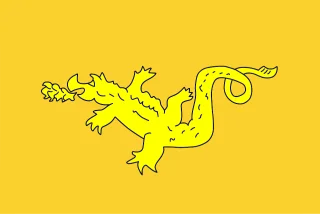
Flag of Xiongnu (Asian Huns): Kirsehirlitv · CC0 · Wikimedia Commons
