Stop 9 / 10 · statesman · 1901 – 1965
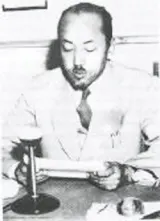
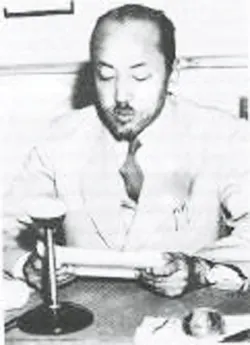
Muhammad Amin Bughra
A madrasa teacher turned revolutionary.
The scholar who led the Khotan rising of 1933, founded the Emirate of Khotan and joined the East Turkistan Islamic Republic, and who in 1940 wrote the history of East Turkistan this site draws on. A religious scholar from Khotan, he later moved to Turkey and died in Ankara.

Why did a rebel leader turn to writing history?
Because the rising had failed and he wanted to understand why. After the fall of the Kashgar republic he fought on in the mountains for a while, then in July 1934 crossed the Sanju pass into India and went on to Kabul. There, living under a false identity, he read Turkish, Arabic and Persian books, followed world politics in the papers and talked through whole nights with the Turkish ambassador, the writer Memduh Şevket Esendal. The fruit was Şarkî Türkistan Tarihi, the history of East Turkistan he finished in Kabul in 1940: a full history of the land written by one of its own people, which this site uses as one of its sources.
His conclusion from those years, Oğuz writes, was that East Turkistan was wanted by three empires at once, Russia, Japan and China, and that the wise course was a temporary agreement with the weakest of them. He refused advice to work with Japan.
Sources: Mehmet Emin Buğra, Şarkî Türkistan Tarihi (1940), in Abdullah Oğuz, Şarkî Türkistan Tarihi: Metin Tenkidi, Türkiye Türkçesi ve İnceleme, MA thesis, İstanbul Üniversitesi (2020)
How did he fight for the name 'Turkistan'?
With a pen, in Chongqing. In 1943 he joined İsa Yusuf Alptekin and Mesut Sabri Baykozi in China's wartime capital, the 'three efendis'. They agreed to ask for wide autonomy first, everything but defence and foreign affairs, and full independence only once the people were ready. In April 1944 they sent the commission drafting China's new constitution nineteen amendments, two of which caused an uproar: that the people of Turkistan be recognised as belonging to the Turkic nation, and that 'Xinjiang' in the constitution be changed to 'Turkistan'. The Kuomintang paper printed a rebuttal by a Chinese historian; Buğra's reply and the exchange were later published as a book, 'Wrestling with the Pen'. The amendments were rejected, but the cause became known.
From 1946 the three served in the provincial coalition government in Ürümqi. Earlier he had already objected to Sheng Shicai's fourteen nationalities, saying 'Türk' was name enough.
Sources: Mehmet Emin Buğra, Şarkî Türkistan Tarihi (1940), in Abdullah Oğuz, Şarkî Türkistan Tarihi: Metin Tenkidi, Türkiye Türkçesi ve İnceleme, MA thesis, İstanbul Üniversitesi (2020) · James A. Millward, Eurasian Crossroads: A History of Xinjiang (London: Hurst, 2007)
Who was he, and how did his life end?
A madrasa teacher from Khotan with a reputation for learning and eloquence, who had also studied modern subjects with teachers from Turkey such as Ahmet Kemal İlkul. In 1933 he and his brothers led the Khotan rising and its government, the 'Khotan emirs'. On 18 September 1949, as the communists approached, he left Ürümqi for Kashmir again, and from there settled in Turkey. He died in Ankara on 14 June 1965, before he could publish the revised edition of his history. He was born in Khotan in 1901.
Sources: Mehmet Emin Buğra, Şarkî Türkistan Tarihi (1940), in Abdullah Oğuz, Şarkî Türkistan Tarihi: Metin Tenkidi, Türkiye Türkçesi ve İnceleme, MA thesis, İstanbul Üniversitesi (2020)
Sources (4)
- Mehmet Emin Buğra, Şarkî Türkistan Tarihi (1940), in Abdullah Oğuz, Şarkî Türkistan Tarihi: Metin Tenkidi, Türkiye Türkçesi ve İnceleme, MA thesis, İstanbul Üniversitesi (2020) · cited only
- James A. Millward, Eurasian Crossroads: A History of Xinjiang (London: Hurst, 2007) · cited only
- Wikidata · cited only
- Andrew D. W. Forbes, Warlords and Muslims in Chinese Central Asia (1986) · cited only