27 August 1949
The Ghulja leaders vanish on the way to Beijing
The disappearance of the Ghulja leaders, which ended the second republic's hopes of autonomy.
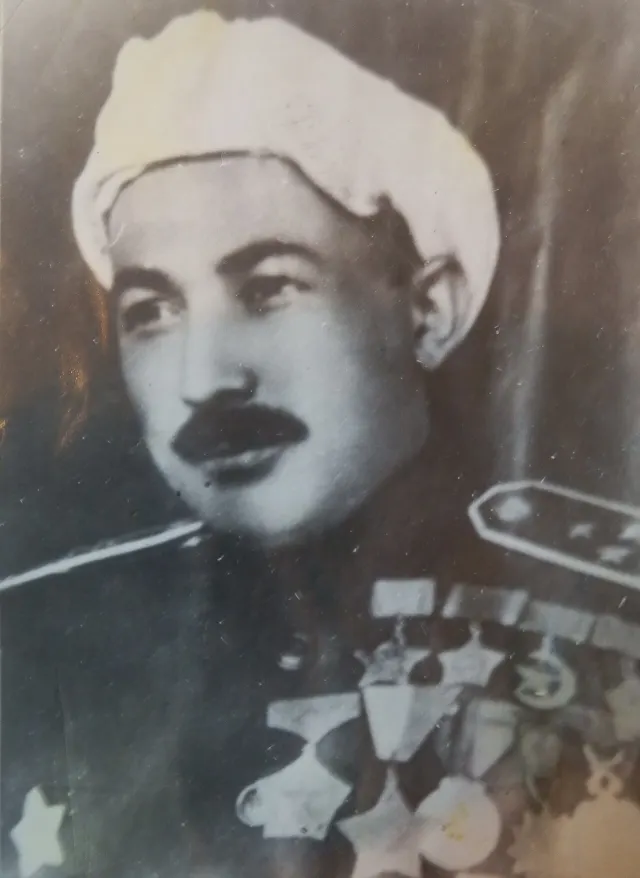
In August 1949 Mao Zedong invited the Ghulja leaders to a conference in Beijing. Ehmetjan Qasimi, Ishaq Beg, Abdulkerim Abbas, Delilhan and Luo Zhi boarded a plane in Almaty and were not heard of again. In December the Chinese authorities said the plane had crashed near Lake Baikal on 27 August. A new delegation went in their place and gave up the call for autonomy.

What led to it, what came of it
- 2 January 1946 · What led to itA peace agreement and a coalition government
- 27 August 1949The Ghulja leaders vanish on the way to Beijing
- 1949 · What came of itXinjiang goes over to the new government in Beijing
Disputed · views side by side
Was there really a plane crash?
Most widely accepted view
27 August 1949
The Chinese authorities (December 1949): on 27 August the plane hit a mountain near Lake Baikal and everyone on board died.
James A. Millward, Eurasian Crossroads: A History of Xinjiang (London: Hurst, 2007) · Ömer Kul, Osman Batur ve Doğu Türkistan Millî Mücadelesi (1941–1951), doctoral thesis, İstanbul Üniversitesi (2009)
1950
Dillon (quoted by Ömer Kul): the crash happened in early 1950, with eight people on board.
Ömer Kul, Osman Batur ve Doğu Türkistan Millî Mücadelesi (1941–1951), doctoral thesis, İstanbul Üniversitesi (2009)
A former deputy chairman of the Xinjiang Uyghur Autonomous Region (published 1984): there was no crash; the leaders were arrested when they reached Beijing, and Ehmetjan Qasimi died in prison in 1962.
Linda Benson, The Ili Rebellion: The Moslem Challenge to Chinese Authority in Xinjiang, 1944–1949 (Armonk: M. E. Sharpe, 1990)
İklil Kurban (quoted by Ömer Kul): the crash was a deception; Soviet officials took these men to Almaty.
Ömer Kul, Osman Batur ve Doğu Türkistan Millî Mücadelesi (1941–1951), doctoral thesis, İstanbul Üniversitesi (2009)
Gökçe Yükselen Abdurrezzak (quoted by Ömer Kul): Stalin and Mao planned the crash.
Ömer Kul, Osman Batur ve Doğu Türkistan Millî Mücadelesi (1941–1951), doctoral thesis, İstanbul Üniversitesi (2009)
The other views are shown with their own sources.
Sources (4)
- Andrew D. W. Forbes, Warlords and Muslims in Chinese Central Asia (1986) · cited only
- James A. Millward, Eurasian Crossroads: A History of Xinjiang (London: Hurst, 2007) · cited only
- Linda Benson, The Ili Rebellion: The Moslem Challenge to Chinese Authority in Xinjiang, 1944–1949 (Armonk: M. E. Sharpe, 1990) · cited only
- Ömer Kul, Osman Batur ve Doğu Türkistan Millî Mücadelesi (1941–1951), doctoral thesis, İstanbul Üniversitesi (2009) · cited only
Years confirmed by two sources.