republic · ≈ 1944 – 1949
East Turkestan Republic
شەرقىي تۈركىستان جۇمھۇرىيىتى
The second East Turkistan republic, whose leaders vanished on their way to Beijing in August 1949. Founded at Ghulja in 1944, it governed the Ili, Tarbaghatay and Altay districts, formed a coalition government with the province in 1946, and passed to the People's Republic in 1949.
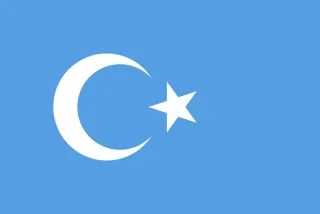
What did the republic at Ghulja do?
It won a war, then ran a state of its own for five years. The republic was proclaimed at Ghulja on 15 November 1944 according to Kul and Forbes (12 November in Benson and Millward), with the scholar Elihan Töre as its first head. Its Ili National Army, about 30,000 strong by the summer of 1945 by one estimate, pushed the Nationalist armies back to the Manas River within sight of Urumchi, while Osman Batur's Kazakhs took the Altay and Tarbaghatay. Then, after the Sino-Soviet treaty of August 1945, the Soviets urged a ceasefire, and in 1946 the republic joined a coalition government with the province under Zhang Zhizhong, with Ahmetjan Qasimi as deputy chairman.
The coalition broke down in 1947, and the three northern districts went their own way. They had their own army, currency and tax system, expanded schools and technical training, published in five languages, cut typhus and raised literacy; even US consular reports called the regime locally popular. In August 1949 most of its leaders died on their way to Beijing; whether their plane really crashed is disputed.
Sources: James A. Millward, Eurasian Crossroads: A History of Xinjiang (London: Hurst, 2007) · Ömer Kul, Osman Batur ve Doğu Türkistan Millî Mücadelesi (1941–1951), doctoral thesis, İstanbul Üniversitesi (2009)
Whose republic was it?
Historians disagree, and Millward compares the accounts to Rashomon. Kul sees a national rising that grew out of Osman Batur's war in the Altay from 1940 and fell under Soviet control soon after it was proclaimed: the Soviets sent arms, officers and men from Soviet Central Asia, the troops wore Russian-style uniforms with 'ETR' in Cyrillic letters, and Kul holds that the Ghulja leaders, Ahmetjan Qasimi above all, had a hand in the disappearance of Elihan Töre in 1946. That turn, he writes, is what drove Osman Batur away from Ghulja.
Beside it stand three other views that Millward sets out. Official PRC accounts treat the 'Three Districts Revolution' as part of the Chinese revolution against the Guomindang, under Communist influence and with Soviet support. Others, following the Nationalist government of the time, see a Soviet operation from the start, to regain influence or detach the region from China. Uyghur nationalists describe a locally led struggle for self-determination that the Soviets restrained and undermined.
Sources: Ömer Kul, Osman Batur ve Doğu Türkistan Millî Mücadelesi (1941–1951), doctoral thesis, İstanbul Üniversitesi (2009) · James A. Millward, Eurasian Crossroads: A History of Xinjiang (London: Hurst, 2007)
Events
- 1944The Ghulja risinguprising · Ghulja
- 1944The East Turkistan Republic is proclaimed in Ghuljafounding · Ghulja · disputed
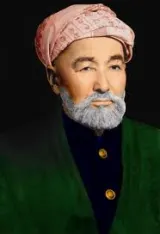
- 1945The Altay is cleared of provincial troopsbattle · Altay City
- 1946A peace agreement and a coalition governmentagreement · Ürümqi
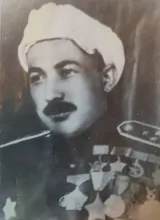
- 1946Osman breaks with Ghuljaevent · Ghulja
- 1949The Ghulja leaders vanish on the way to Beijingevent
People of this time
Sources (2)
- James A. Millward, Eurasian Crossroads: A History of Xinjiang (London: Hurst, 2007) · cited only
- Ömer Kul, Osman Batur ve Doğu Türkistan Millî Mücadelesi (1941–1951), doctoral thesis, İstanbul Üniversitesi (2009) · cited only
Years are approximate; they will be checked against a second source.
Flag of East Turkestan Republic: User:Tarkan · Public domain · Wikimedia Commons
