ruler · 1694 – 1777
Emin Khoja
ئەمىن خوجا
The ruler of Turfan who chose the Qing over the Dzungars, rode with the Qing banners into the south in the 1750s, and whose minaret still stands over Turfan.
After the conquest he helped govern Kashgar and Yarkand, and his descendants ruled Turfan as tax-free 'princes' (wang).

Life
Why is he remembered in two ways?
Because he stood with the Qing, and the reward was high. Emin Khoja, ruler of Turfan, led his own troops alongside the Qing banners in the campaigns in southern Xinjiang, and after the conquest was put in charge of Kashgar and Yarkand together with the prince of Hami. His descendants stayed on in Turfan as 'princes' (wang): the wangs of Hami and Turfan paid no taxes to the state, received titles like members of the Qing royal house, kept their own retainers, and ruled the people of their home districts as serfs, called yanchi.
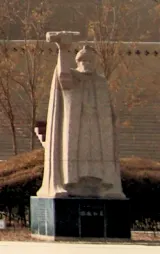
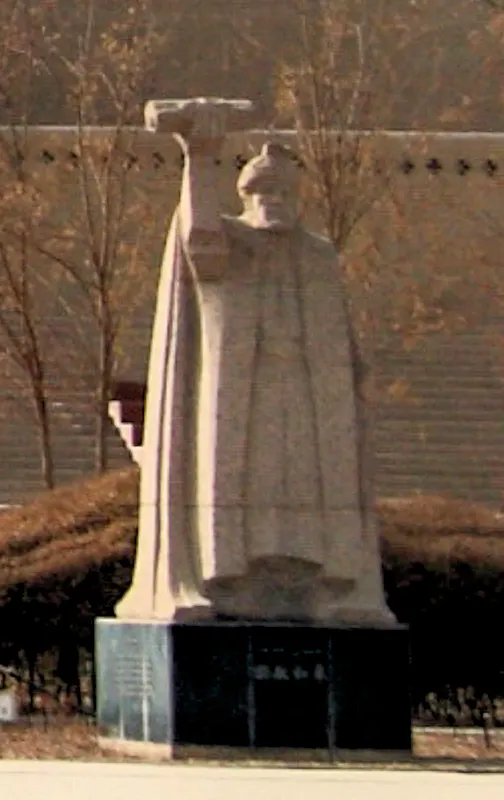
His best-known trace is the tall minaret at Turfan. The Qianlong emperor built this graceful minaret and mosque, in a style going back to the Samanids, to commemorate Emin Khoja's collaboration with the Qing conquest. It once stood alone on a small rise among vineyards and mud-brick houses; by 2004 a large car park and garden had been added, and visitors walked up past a modern statue of Emin Khoja, hands and eyes raised in supplication as he receives the emperor's edict. Millward gives it as an example of a historical message being sharpened.
Sources: James A. Millward, Eurasian Crossroads: A History of Xinjiang (London: Hurst, 2007)
Sources (2)
- James A. Millward, Eurasian Crossroads: A History of Xinjiang (London: Hurst, 2007) · cited only
- Wikidata · cited only
Years come from Wikidata only and are not yet checked against a second source.