explorer · 1865 – 1952
Sven Hedin
سۋېن ھېدىن
The Swedish explorer who crossed the Taklamakan and found two lost cities in the sand, Dandan Oilik in 1896 and Loulan in 1900, and so helped start the race for the buried Silk Road.
His collections are in Stockholm.
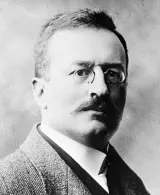
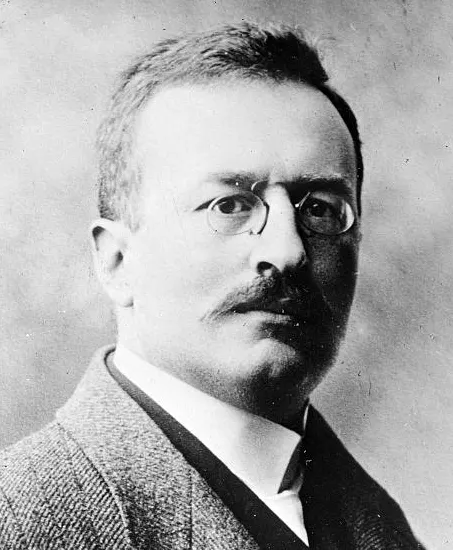

Life
How did he find cities under the sand?
By crossing the desert others avoided. Hedin was a geographer before he was an archaeologist, and he went into the Taklamakan to map it. In 1896 he came upon Dandan Oilik, the Buddhist town in the sand that Stein would dig four years later, and in 1900 upon Loulan near Lop Nur, the capital of the old kingdom of Kroraina. His reports in Through Asia and Central Asia and Tibet made the buried Silk Road famous in Europe and helped start the race of expeditions that followed. His collections are in Stockholm.
He came back in the late 1920s and 1930s with the Sino-Swedish expedition, a joint venture with Chinese scientists. Its geologists named the first dinosaur found in Xinjiang and found oil reserves in the Tarim and Turfan basins. Governor Yang Zengxin made even this expedition exchange its silver for his paper money, and in his book on the wars of the 1930s Hedin nicknamed the young Hui warlord Ma Zhongying 'Big Horse'.
Sources: Hedin, Through Asia (1898) · Hedin, Central Asia and Tibet (1903) · James A. Millward, Eurasian Crossroads: A History of Xinjiang (London: Hurst, 2007)
Sources (5)
- Hedin, Through Asia (1898) · public domain
- Hedin, Central Asia and Tibet (1903) · public domain
- James A. Millward, Eurasian Crossroads: A History of Xinjiang (London: Hurst, 2007) · cited only
- Wikidata · cited only
- Werner Sundermann, “Turfan Expeditions”, Encyclopaedia Iranica (2004) · cited only
Years confirmed by two sources.