statesman · 1889 – ≈ 1937 most likely
Hoja-Niyaz
خوجا نىياز ھاجى
The leader of the 1931 Kumul rising who became president of the East Turkistan Islamic Republic at Kashgar in 1933, then made a deal with Sheng Shicai that cost him first his power and in the end his freedom.
As vice-chairman of the province from 1934 he held a post without power; Sheng later had him arrested, and when and how he died is disputed.
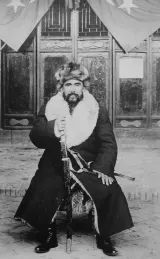
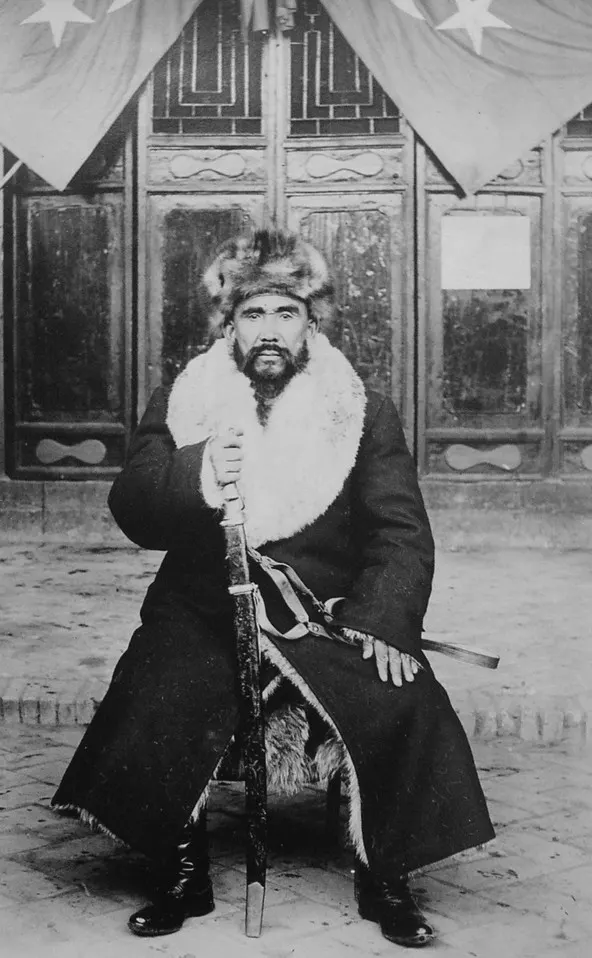

Life and works
- 1889BornYizhou District
- 1931uprisingThe Kumul uprising beginsThe rising that set all Xinjiang on fire in the 1930s and led to the first East Turkistan republic.
- 1933foundingThe East Turkistan Republic is proclaimed in KashgarThe first state to call itself East Turkistan: it lasted barely three months, but Millward counts its founding as an event of great historical moment for Uyghur nationalism.
- 1934fallThe Kashgar republic fallsThe end of the first East Turkistan republic, and a betrayal: its president handed over its prime minister.
- 1937uprisingThe southern revolt of 1937 and the purgesA revolt crushed with Soviet help, and the start of Sheng's great purges.
- ≈ 1937 – 1938DiedÜrümqiburied here: Ürümqi
Why did the republic's president hand over his own prime minister?
Because by then he had made his own deal. Khoja Niyaz had been a minister of the khan of Kumul and led the Kumul rising from 1931. The men who proclaimed the East Turkistan Republic at Kashgar in November 1933 named him its president for life while he was still in Aksu; he arrived to a warm welcome in January 1934. A month later Ma Zhongying's Hui troops drove the government out of Kashgar and massacred Uyghur civilians, by one primary source some 4,500 people.
Fleeing south, Khoja Niyaz and his commander Mahmud Muhiti met Soviet agents near Tashkurgan. At Yengisar and Yarkand they found the prime minister, Sabit Damolla, and other ministers, took prisoner the very people who had made him president, and handed them over in Aksu. In return Sheng Shicai made him vice-chairman of the province. Millward calls the republic 'ambiguous' partly because of this odd choice of president: a khan's vizier who was already the warlord's ally.
Sources: James A. Millward, Eurasian Crossroads: A History of Xinjiang (London: Hurst, 2007) · Andrew D. W. Forbes, Warlords and Muslims in Chinese Central Asia (1986)
What became of him?
The deal bought him little. As vice-chairman he had a title without power, and when Sheng Shicai's purges began after 1937 he was arrested, accused of spying for the Japanese. When and how he died is disputed: Forbes, from British India Office files, says he was executed in the winter of 1937–38; Wikidata gives 1941, in prison in Ürümqi. The two views stand side by side below.
Sources: James A. Millward, Eurasian Crossroads: A History of Xinjiang (London: Hurst, 2007) · Andrew D. W. Forbes, Warlords and Muslims in Chinese Central Asia (1986) · Wikidata
Sources (3)
- James A. Millward, Eurasian Crossroads: A History of Xinjiang (London: Hurst, 2007) · cited only
- Andrew D. W. Forbes, Warlords and Muslims in Chinese Central Asia (1986) · cited only
- Wikidata · cited only
Years come from Wikidata only and are not yet checked against a second source. Wikidata gives another year: 1941.