Stop 6 / 10 · poet · ≈ 1017 – ≈ 1075
Yusuf Khass Hajib
A poet who wrote a book of advice for rulers in Kashgar.
The Karakhanid courtier and poet who wrote the Kutadgu Bilig, a long poem on how to rule well, in Kashgar in 1069–70. Born in Balasagun (today Burana, Kyrgyzstan), he presented the book to the Karakhanid ruler, who made him Khass Hajib, the chamberlain who guarded the ruler's door.
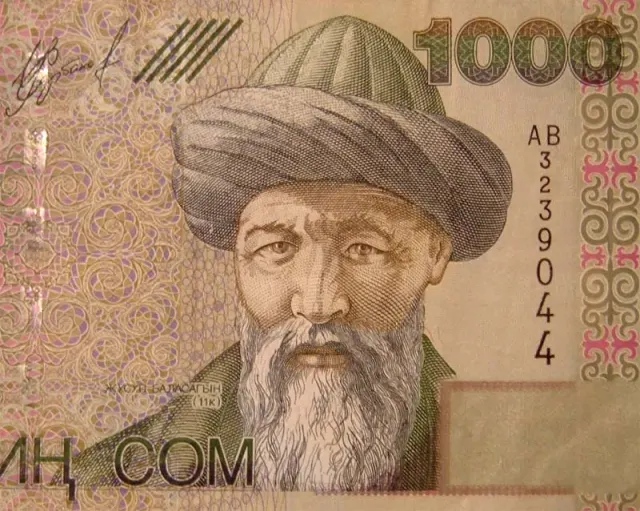

Why did a courtier write a book on how to rule?
The man who wrote the period's great book on how to govern was not a hermit but a courtier who knew the palace from inside. When he presented the Kutadgu Bilig to the Karakhanid ruler Abu Ali Hasan Bughra Khan, the ruler made him Khass Hajib, the 'privy chamberlain': the official who stood at the ruler's door and decided who might see him. Buğra renders the title in Turkic as tayangu or 'master of the threshold'. The tension between serving the state and turning away from the world runs through his whole poem.
He finished the book in Kashgar in the Hijri year 462 (1069–70). Like Mahmud al-Kashgari he had studied at the Halik madrasa in Kashgar. He was born in Balasagun, one of the Karakhanid capitals, in today's Kyrgyzstan.
Sources: James A. Millward, Eurasian Crossroads: A History of Xinjiang (London: Hurst, 2007) · Mehmet Emin Buğra, Şarkî Türkistan Tarihi (1940), in Abdullah Oğuz, Şarkî Türkistan Tarihi: Metin Tenkidi, Türkiye Türkçesi ve İnceleme, MA thesis, İstanbul Üniversitesi (2020)
Sources (4)
- James A. Millward, Eurasian Crossroads: A History of Xinjiang (London: Hurst, 2007) · cited only
- Mehmet Emin Buğra, Şarkî Türkistan Tarihi (1940), in Abdullah Oğuz, Şarkî Türkistan Tarihi: Metin Tenkidi, Türkiye Türkçesi ve İnceleme, MA thesis, İstanbul Üniversitesi (2020) · cited only
- Gemeinsame Normdatei (GND), Deutsche Nationalbibliothek, via lobid.org · cited only
- Wikidata · cited only