manuscript
The Bower manuscript
باۋېر قوليازمىسى
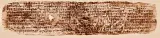
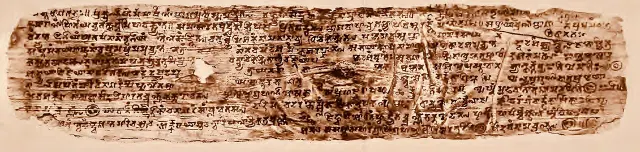
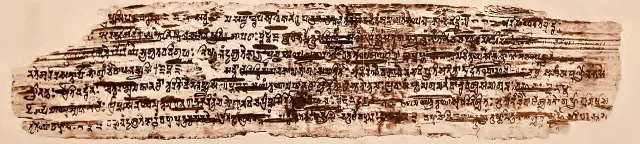
The manuscript that set off the race of foreign expeditions to the Tarim: a 5th-century Sanskrit medical text on birch bark, found near Kucha in 1890, the first manuscript in Brahmi script known to the West.


How did one manuscript start a race?
By showing the West what the sand was hiding. In 1890 a British officer, Hamilton Bower, bought some birch-bark leaves near Kucha. Deciphered by A. F. R. Hoernle in Calcutta, they turned out to be a collection of Sanskrit medical texts of the 5th century, the first manuscript in the Brahmi script known to the West. Stein wrote that from 1891, when the 'famous birch-bark codex acquired by Colonel Bower from Kucha' became known, his eyes were turned to Eastern Turkestan. The Government of India told its agents in Kashgar, Ladakh and Kashmir to buy antiques, and the European powers sent expeditions of their own.
The demand created supply. In the 1890s a Khotan 'treasure-seeker', Islam Akhun, sold Calcutta 'ancient books' in unknown scripts, and scholars published them. Stein, checking the sites Islam Akhun had named, found that they did not exist, and in 1901 the forger confessed to him that he had made the books himself.
Sources: Chao-jung Ching, “Kucha”, Encyclopaedia Iranica (2021) · Stein, Ancient Khotan (1907) · Tachibana Zuichō's work for the Ōtani expeditions; Hopkirk, Foreign Devils on the Silk Road (1980)
Sources (3)
- Chao-jung Ching, “Kucha”, Encyclopaedia Iranica (2021) · cited only
- Stein, Ancient Khotan (1907) · public domain
- Tachibana Zuichō's work for the Ōtani expeditions; Hopkirk, Foreign Devils on the Silk Road (1980) · cited only