document · ≈ 750 – 850
The Tibetan documents of the Miran fort
مىران قەلئەسىدىكى تىبەتچە ھۆججەتلەر
The office papers of a Tibetan garrison in the Tarim 1,200 years ago, reports, applications and requisitions, dug by Aurel Stein in 1907 from the refuse heaps of a fort at Miran, south of Lop Nur, together with fragments in Old Turkic runic script.
Stein dated the fort's occupation to the 8th–9th centuries; the fort of Mazar Tagh on the Khotan river has yielded Tibetan documents of the same time.
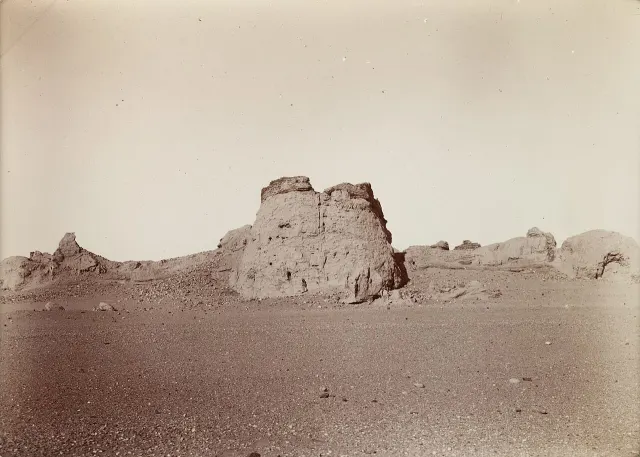

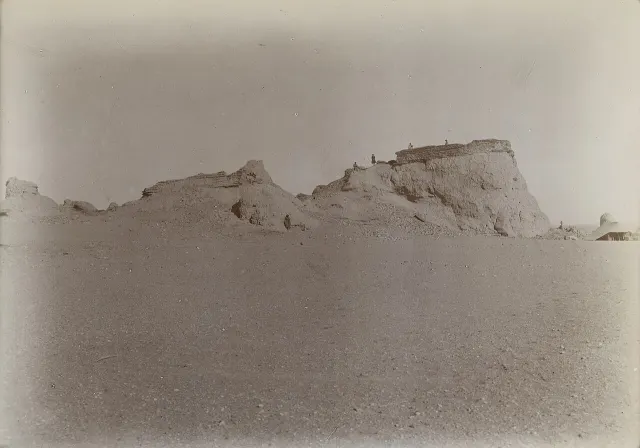

What was life like in a Tibetan garrison?
Crowded, cold and full of paperwork. Stein dug the fort at Miran, south of Lop Nur, in 1907. Its rooms were filled to the floor with refuse, and in one group of small closets the finds rose to 136 by the second day. Most of the Tibetan records were narrow slips of wood, six to eight inches long, with a seal socket at one end, which shows that they were official business: reports, applications, requisitions. Paper sheets were sometimes still folded as if ready to send, with seals in red. Besides them lay pieces of red and black lacquered leather scale armour, still laced with their original thongs, large storage jars marked with a Tibetan letter, and fragments in the Old Turkic runic script.
They are a rare view from the Tibetan side of the two-hundred-year struggle for the Tarim. Stein dated the fort's use to the 8th–9th centuries, when the Tibetan empire held the south of the basin; the fort of Mazar Tagh on the Khotan river has yielded Tibetan papers of the same years.
Sources: Stein, Serindia (1921)
Sources (1)
- Stein, Serindia (1921) · public domain