republic · ≈ 1912 – 1949
Republic of China
جۇڭخۇا مىنگو
Thirty-seven years in which the province belonged to the Republic of China in name but was ruled by its governors as their own: Yang Zengxin, Jin Shuren and Sheng Shicai, a banquet murder, a coup, Soviet intervention and two republics.
It lasted from 1912 to 1949.
How did Yang Zengxin rule?
Quietly and without mercy. He summed up his method himself: 'when a cat catches a mouse, the cat emits no cry'. In February 1916, having learned that a group of Yunnanese officers was plotting against him, he invited them to a New Year banquet; after a few cups of wine he gave a signal, his guards beheaded the leaders at the table, and he calmly finished his dinner. He played every group against the others: Kazakhs against Mongols, conservative ulama against the jadid reformers, and he left local headmen, nomad chiefs and the princes of Kumul and Turfan free to enrich themselves within limits.
He also tried to shut the province off. He censored the mail, kept tight control of the telegraph, blocked roads to China, closed schools and let conservatives shut down the new Muslim schools; Uyghur and PRC historians alike call his 'policy of keeping the people ignorant' the most damaging part of his rule. Judgements of him differ: a later official called Xinjiang under Yang 'an Earthly Paradise', the British consul praised his low taxes, while Forbes and PRC scholars see a feudal warlord. He was shot at a banquet in July 1928.
Sources: James A. Millward, Eurasian Crossroads: A History of Xinjiang (London: Hurst, 2007)
What happened under Jin Shuren and Sheng Shicai?
First a collapse, then a Soviet satellite. Jin Shuren, Yang's deputy, seized power by executing Yang's killers, then printed money (145 million taels of unbacked notes against Yang's 10 million), taxed even the slaughter of livestock, banned the hajj and tried to replace non-Chinese leaders with Han officials; abolishing the principality of Kumul set off the rising of 1931 and years of war across the province. In April 1933 a coup in Urumchi drove him out, and the soldier Sheng Shicai emerged as ruler.
Sheng stayed in power with Soviet help. Soviet troops crushed his enemies in 1934 and 1937; Soviet loans, advisers and secret-police methods followed, and Soviet engineers mined the province's minerals and opened the Dushanzi oil field. Sheng recognised fourteen nationalities and gave the name 'Uyghur' its first official use, but his purges swept away a whole generation of Uyghur and Hui leaders; estimates of those killed range from 50,000 to 100,000. In 1942, sensing the war turning, he switched to the Nationalists, closed the Soviet trade and executed Chinese communists, among them Mao Zemin, Mao Zedong's brother.
Sources: James A. Millward, Eurasian Crossroads: A History of Xinjiang (London: Hurst, 2007)
Where was the central government in these thirty-seven years?
Mostly far away, claiming more than it held. Yang swore loyalty to each government in Beijing and then to Chiang Kai-shek's Nanjing, renamed his titles to match, and remained, in Millward's words, free from any substantial political influence from Beijing. By 1928 trade with the Soviet Union was worth almost ten times trade with China, because Soviet goods came by rail while Chinese goods needed a three-month caravan journey. Nanjing recognised whoever held power in Urumchi, and even gave titles to the Tungan warlords who were fighting the provincial government.
Buğra, who lived through these years, describes the same arrangement from inside: the Chinese government knew Yang was an independent despot opposed to everything republican, but accepted his outward loyalty, because its aim was to show the world that East Turkistan belonged to the Republic of China; Yang carried out its few instructions in ways that served himself. Millward adds that Nanjing's policy of keeping its claim through thick and thin, even without real influence or money, proved successful in the end. Real Nationalist control came only in 1942–1944, when Sheng changed sides.
Sources: James A. Millward, Eurasian Crossroads: A History of Xinjiang (London: Hurst, 2007) · Mehmet Emin Buğra, Şarkî Türkistan Tarihi (1940), in Abdullah Oğuz, Şarkî Türkistan Tarihi: Metin Tenkidi, Türkiye Türkçesi ve İnceleme, MA thesis, İstanbul Üniversitesi (2020)
Events
- 1912Yang Zengxin takes powerevent · Ürümqi
- 1913The 'rebel school' of Astanafounding · Astana Cemetery
- 1914Stein digs in Qochoexpedition · Qocho
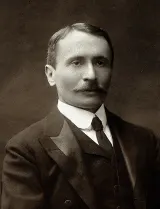
- ≈ 1914The Artush teachers' schoolfounding · Artush
- 1921The name 'Uyghur' comes backevent
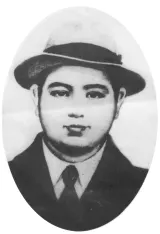
- 1928The 7-7 Incident: Yang Zengxin is shotevent · Ürümqi
- 1931The Kumul uprising beginsuprising · Yizhou District
- ≈ 1931The Kumul principality is abolishedfall · Yizhou District
- 1933The 4-12 coup: Sheng Shicai comes to powerevent · Ürümqi
- 1934The Kashgar republic fallsfall · Aksu
- 1934Soviet troops enter Xinjiangbattle · Ghulja
- 1937The southern revolt of 1937 and the purgesuprising · Kashgar
- 1940The Altay Kazakhs riseuprising · Fuyun
- 1944The Ghulja risinguprising · Ghulja
- 1944Sheng Shicai is removed from Xinjiangevent · Ürümqi
- 1946A peace agreement and a coalition governmentagreement · Ürümqi
- 1946Osman breaks with Ghuljaevent · Ghulja
- 1947The Baytik Bogda clashbattle · Baytag Bogd Uul
- 1949Xinjiang goes over to the new government in Beijingevent · Ürümqi
People of this time
Sources (2)
- James A. Millward, Eurasian Crossroads: A History of Xinjiang (London: Hurst, 2007) · cited only
- Mehmet Emin Buğra, Şarkî Türkistan Tarihi (1940), in Abdullah Oğuz, Şarkî Türkistan Tarihi: Metin Tenkidi, Türkiye Türkçesi ve İnceleme, MA thesis, İstanbul Üniversitesi (2020) · cited only
Years are approximate; they will be checked against a second source.
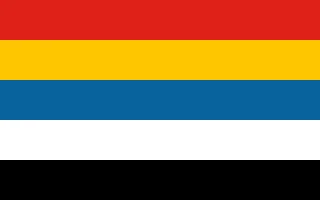
Flag of Republic of China (1912 – 1928): Original: en:Provisional Government of the Republic of China (1912) Vector: Kibinsky · Public domain · Wikimedia Commons
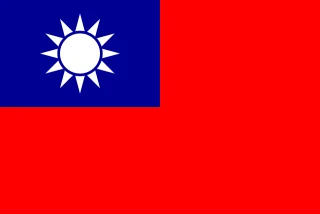
Flag of Republic of China (1928 – 1949): Sun Yat-sen · Public domain · Wikimedia Commons

