statesman · 1885 – 1976
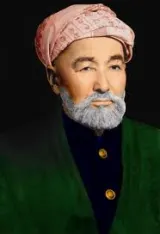
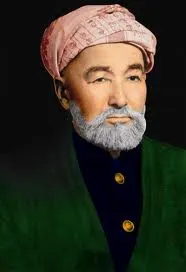
Elihan Tore Saghuni
ئەلىخان تۆرە
The first president of the East Turkistan Republic proclaimed at Ghulja in 1944, who in 1946 got into a Soviet officers' car and never came back.
He was the imam of Ghulja's largest mosque and also a dentist, chosen by Uyghurs, Kazakhs and Kyrgyz as a man all sides could accept. An Uzbek, he was born, according to Kul, in 1885 in the village of Sughun near Tokmak, and died in Tashkent in 1976.

Life and works
- 1885BornElihan Tore Saghuni
- 15 November 1944 · disputedfoundingThe East Turkistan Republic is proclaimed in GhuljaThe proclamation that turned a rising in one town into a state: for the next five years the Ili, Tarbaghatay and Altay districts had a government and an army of their own.
- 1976DiedElihan Tore Saghuni
Why was an imam made head of state?
Because he belonged to no camp. Kul's oral-history interviews tell how the presidency set off arguments among the Uyghurs, Kazakhs and Kyrgyz who had made the rising. Elihan Töre had come to East Turkistan after the October Revolution of 1917; he had studied religion in Egypt, Saudi Arabia and Bukhara and also trained as a dentist, and from 1929 he worked in Ghulja both as a cleric and as a dentist. People knew him as learned and impartial. Being an Uzbek, and said to come from the line of the töre, put him outside the quarrels between tribes.
He had not come the easy way: Sheng Shicai had him arrested in 1937, and after his release in 1942 he became chief imam of the Beytullah mosque, Ghulja's largest. In the rising of 1944 he chaired the Ghulja Liberation Society. Kul rejects Forbes's view that he was president in name only: he was, Kul writes, the republic's first and founding president with full powers. At the founding ceremony of the National Army on 8 April 1945 he spoke before ten thousand people on Islamic unity, Turkic unity and nationalism.
Sources: Ömer Kul, Osman Batur ve Doğu Türkistan Millî Mücadelesi (1941–1951), doctoral thesis, İstanbul Üniversitesi (2009)
Why did he disappear?
Because he would not make peace with Chinese rule. Elihan Töre was firmly against any settlement with the Chinese government; historical documents record that he objected to the agreement and wept, and he refused, despite repeated offers, to take a post in the coalition government that followed. The men who joined that government from the Ili side in 1946 were all linked to Moscow; nationalists like Elihan Töre and Osman Batur were left out.
How he vanished is told in different ways. Kul, drawing on written materials, says that the Soviet consul in Ghulja, Dabishin, acting on an order from Stalin, had him brought to Khorgas and flown from there to Russia. Anti-Soviet Kazakh sources tell it this way: on 16 August 1946 four Soviet officers crossed the border from Khorgas, visited him at home in Ghulja and invited him to a meal at Khorgas; he got into their car and never returned. One researcher claims the Chinese kidnapped him; Kul rejects this. After he disappeared the Ghulja government declared Ehmetjan Qasimi president, Soviet influence grew, and Osman Batur broke off all contact with Ghulja. Kul records that he died in Tashkent in 1976.
Sources: Ömer Kul, Osman Batur ve Doğu Türkistan Millî Mücadelesi (1941–1951), doctoral thesis, İstanbul Üniversitesi (2009)
Sources (2)
- Ömer Kul, Osman Batur ve Doğu Türkistan Millî Mücadelesi (1941–1951), doctoral thesis, İstanbul Üniversitesi (2009) · cited only
- Wikidata · cited only
Years come from Wikidata only and are not yet checked against a second source.