manuscript · ≈ 1069 – 1070
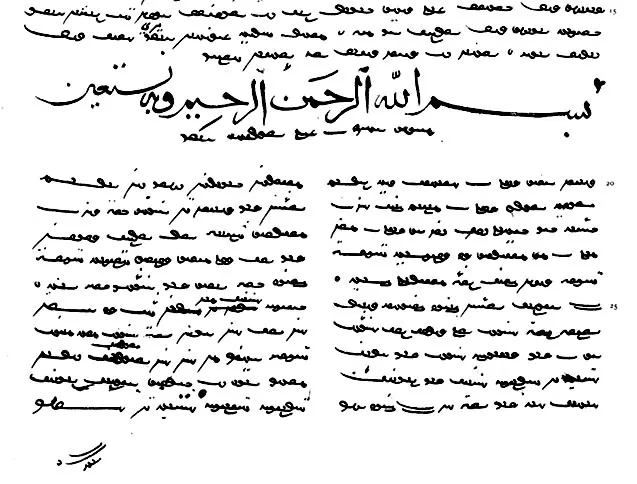
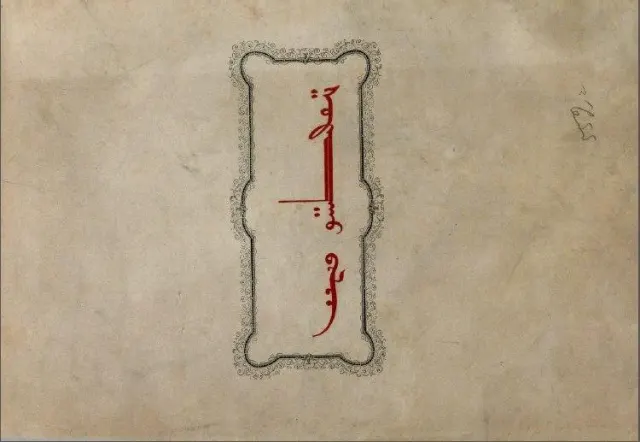
Kutadgu Bilig
قۇتادغۇ بىلىك
A poem of more than 6,500 couplets on how to rule well and how to live well, finished in Kashgar in 1069–70, and one of only two Turkic books of the Karakhanid age to survive.
Yusuf Khass Hajib wrote it as conversations between a king, his vizier, a sage and an ascetic. Its title means 'wisdom that brings good fortune'.


What does the book tell?
It is a long poem built as conversations among four characters. A king stands for Justice, his vizier for Fortune, the vizier's son, a sage, for Wisdom, and an ascetic, whose name means 'Wide Awake', for man's last end, religion. Through their talks the book teaches how a ruler should govern, whom he should trust, how officials, soldiers, merchants and farmers should be treated, and what makes a good life.
The second half turns on a question much argued in the Islamic world of the time: is it better to serve the community and the state, or to withdraw to the mountains and live for God alone? The king keeps inviting the ascetic to court, and the ascetic keeps refusing. Millward notes that later Sufis in the region found their own answer, serving God and king at once.
Sources: James A. Millward, Eurasian Crossroads: A History of Xinjiang (London: Hurst, 2007)
Why does it matter?
Written in Kashgar in 1069–70, about a century after the Karakhanid rulers became Muslim, it is one of only two Turkic works of the Karakhanid age to survive, the other being Mahmud al-Kashgari's Diwan. Buğra stresses that its more than 6,500 couplets use fewer than a hundred Arabic words: the book shows that Turkic could already carry philosophy, ethics and statecraft, and that Muslim Turkic society in East Turkistan was highly cultivated. It joins the Islamic and Iranian tradition of advice for princes with Sufi values and puts both into Turkic verse.
Yusuf presented it to the Karakhanid ruler, who rewarded him with the title Khass Hajib. Today he is a national hero for Uyghurs, and a modern shrine to him in Kashgar is on every visitor's route.
Sources: Mehmet Emin Buğra, Şarkî Türkistan Tarihi (1940), in Abdullah Oğuz, Şarkî Türkistan Tarihi: Metin Tenkidi, Türkiye Türkçesi ve İnceleme, MA thesis, İstanbul Üniversitesi (2020) · James A. Millward, Eurasian Crossroads: A History of Xinjiang (London: Hurst, 2007)
Events
Sources (2)
- James A. Millward, Eurasian Crossroads: A History of Xinjiang (London: Hurst, 2007) · cited only
- Mehmet Emin Buğra, Şarkî Türkistan Tarihi (1940), in Abdullah Oğuz, Şarkî Türkistan Tarihi: Metin Tenkidi, Türkiye Türkçesi ve İnceleme, MA thesis, İstanbul Üniversitesi (2020) · cited only