Stop 7 / 11 · ruler · 1509 – 1570
Abdurashid Khan
A new khan, and a historian in exile.
The khan to whom Mirza Haidar dedicated his great history, the Tarikh-i Rashidi, named after him; his wife Amannisa Khan is remembered for the Twelve Muqam. Son and heir of Sultan Said Khan, he ruled Yarkand from 1533; Babur, the Tarikh says, chose his name because 'Abdur Rashid' rhymed with 'Sultan Said'.

How did his reign begin?
With a killing at his father's grave. When Said Khan died in July 1533, Abdurashid was at Aksu. In Yarkand the chief emir, Sayyid Muhammad Mirza, Mirza Haidar's uncle, arranged the mourning and a royal welcome for him. But Ali Taghai, another emir, rode out in secret and told Abdurashid that Sayyid Muhammad planned to kill him and put his brother Iskandar on the throne. On the morning of 1 Muharram 940, as Abdurashid rode up to the tomb, Sayyid Muhammad came out to meet him in mourning, his robe torn and his turban on the ground. Abdurashid had him seized and beheaded on the spot, and then sent men to Kashgar to kill three of his young kinsmen.
The story comes from Mirza Haidar, the dead man's nephew, who calls the plot a lie and writes that, apart from one of Timur's grandsons, no one had ever done such wrong. Buğra, using the same book, tells it a little differently: Sayyid Muhammad had made the emirs confirm him as chief emir and meant to keep Abdurashid on the throne in name only. Either way, Abdurashid was then raised on white felt as khan of East Turkistan and Tibet, and gave the chief emir's office to Ali Taghai.
Sources: Mirza Muhammad Haidar Dughlat, The Tarikh-i-Rashidi: A History of the Moghuls of Central Asia, tr. E. Denison Ross, ed. N. Elias (London, 1895) · Mehmet Emin Buğra, Şarkî Türkistan Tarihi (1940), in Abdullah Oğuz, Şarkî Türkistan Tarihi: Metin Tenkidi, Türkiye Türkçesi ve İnceleme, MA thesis, İstanbul Üniversitesi (2020)
What did his reign leave behind?
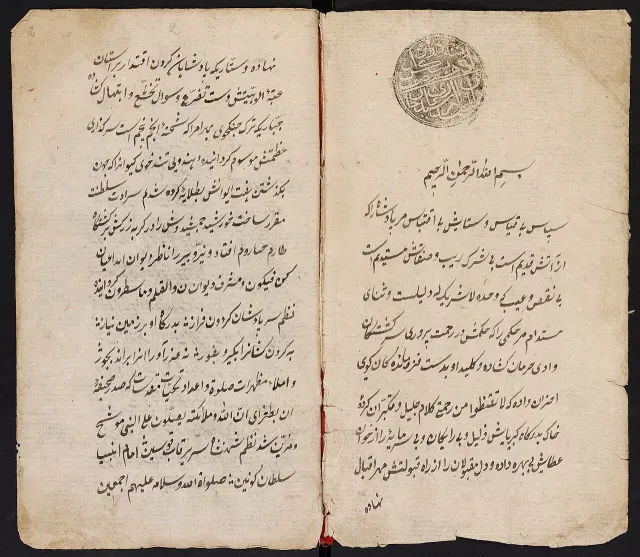
A book named after him, and a long silence. Mirza Haidar did not go back to Yarkand after his uncle's death; he crossed into Badakhshan and joined Babur's son Humayun. Yet when he wrote his history in Kashmir, he dedicated it to Abdurashid, 'the last of the Moghul khakans', then reigning, and called it the Tarikh-i Rashidi. The conquests in Tibet and Kashmir that had cost his father's life were lost within a year.
After that the sources almost stop. Buğra writes that under Abdurashid all of today's East Turkistan except the Altay and Emil belonged to the state and lived in deep peace and order; and he apologises to his readers that for the years from Abdurashid's accession onward he found only scraps, because the Tarikh's continuations could not be found in Afghanistan or India. Even the year of Abdurashid's death is uncertain: Buğra gives 1570–71, the English edition of the Tarikh 1565–66. A son followed him on the throne.
Sources: Mirza Muhammad Haidar Dughlat, The Tarikh-i-Rashidi: A History of the Moghuls of Central Asia, tr. E. Denison Ross, ed. N. Elias (London, 1895) · Mehmet Emin Buğra, Şarkî Türkistan Tarihi (1940), in Abdullah Oğuz, Şarkî Türkistan Tarihi: Metin Tenkidi, Türkiye Türkçesi ve İnceleme, MA thesis, İstanbul Üniversitesi (2020)
Sources (3)
- Mirza Muhammad Haidar Dughlat, The Tarikh-i-Rashidi: A History of the Moghuls of Central Asia, tr. E. Denison Ross, ed. N. Elias (London, 1895) · public domain
- Mehmet Emin Buğra, Şarkî Türkistan Tarihi (1940), in Abdullah Oğuz, Şarkî Türkistan Tarihi: Metin Tenkidi, Türkiye Türkçesi ve İnceleme, MA thesis, İstanbul Üniversitesi (2020) · cited only
- Wikidata · cited only