statesman · 1894 – 1989
Burhan Shahidi
بۇرھان شەھىدى
The man who chaired the Xinjiang provincial government in 1949 and, with the garrison commander, brought the province over to the People's Republic; he went on to hold office under it.
A Tatar, he was born near Kazan.
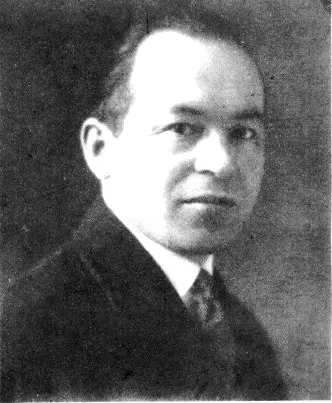

Life and works
- 1894BornBurhan Shahidi
- 1949eventXinjiang goes over to the new government in BeijingXinjiang changes sides without a battle.
- 1989DiedBurhan Shahidi
How did Xinjiang change sides without a battle?
Through the man Nanjing had put in charge only months before. In January 1949 the Nationalists made Burhan Shahidi provincial chairman, a caretaker and compromise figure. He steadied the finances by taking Xinjiang off the collapsing Nationalist gold yuan and bringing back the Xinjiang dollar, and let Turkic nationalist groups organise. By the summer the Nationalist armies were in full retreat in China; Xinjiang's 80,000 Nationalist troops were pinned down by 12,000 men of the Ili army north of the Manas river.
In late September 1949 the garrison commander Tao Zhiyue cabled the Communists to announce his surrender, and Burhan followed the next day. Mao Zedong and Zhu De wired back their congratulations. In mid-October Wang Zhen's army entered Xinjiang and took the south with no resistance. Burhan stayed on as provincial chairman, but, Millward notes, without great influence; he became the first president of the Chinese Islamic Association.
Sources: James A. Millward, Eurasian Crossroads: A History of Xinjiang (London: Hurst, 2007)
Who was he?
A Tatar with two lives. In the 1920s, in Ürümqi, he read the Tatar reformer Gasprinskii, published a journal called Turan and wrote to the Ottoman teacher Ahmet Kemal that they were working together 'to defend their nation against the forces of decline'; he and other Tatar merchants paid for a modern school in an Ürümqi mosque, later with classes for girls. In the late 1940s he took up Chinese nationalism instead. Between the two he travelled and studied in Germany and the Soviet Union, was jailed by Sheng Shicai as a 'Trotskyite', and served as a deputy of the Nationalist governor Zhang Zhizhong, under whom he also edited a Uyghur–Chinese–Russian dictionary. He was born near Kazan in 1894 to a family with roots in Aksu, and wrote memoirs later published in the People's Republic.
Sources: James A. Millward, Eurasian Crossroads: A History of Xinjiang (London: Hurst, 2007)
Sources (4)
- James A. Millward, Eurasian Crossroads: A History of Xinjiang (London: Hurst, 2007) · cited only
- Wikidata · cited only
- Linda Benson, The Ili Rebellion: The Moslem Challenge to Chinese Authority in Xinjiang, 1944–1949 (Armonk: M. E. Sharpe, 1990) · cited only
- Andrew D. W. Forbes, Warlords and Muslims in Chinese Central Asia (1986) · cited only
Years come from Wikidata only and are not yet checked against a second source.