theme · ≈ 384 – 1826
Religion
Buddhism, Manichaeism, Christianity and Islam lived side by side here and followed one another.
24 events · 10 people · 5 objects
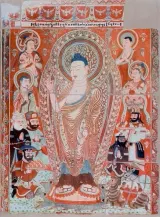
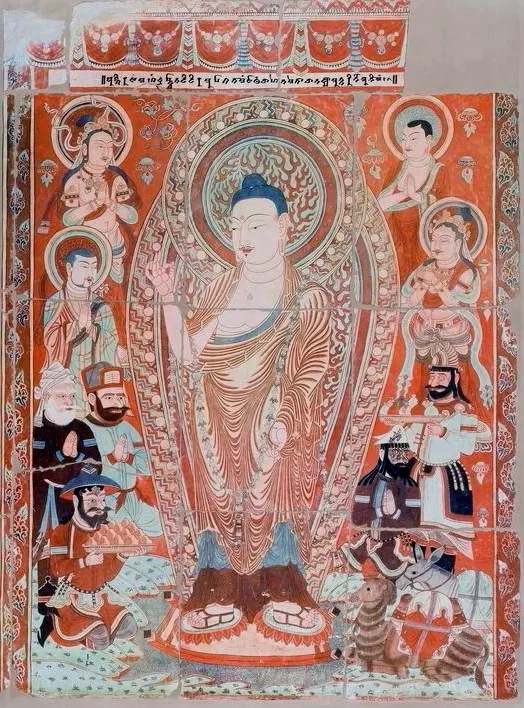
Why did so many faiths meet here?
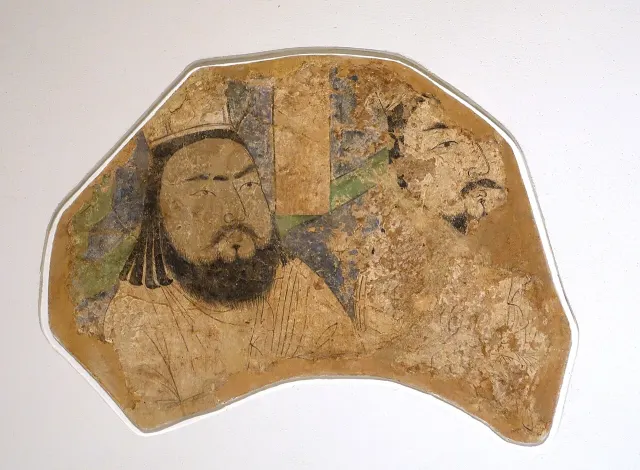
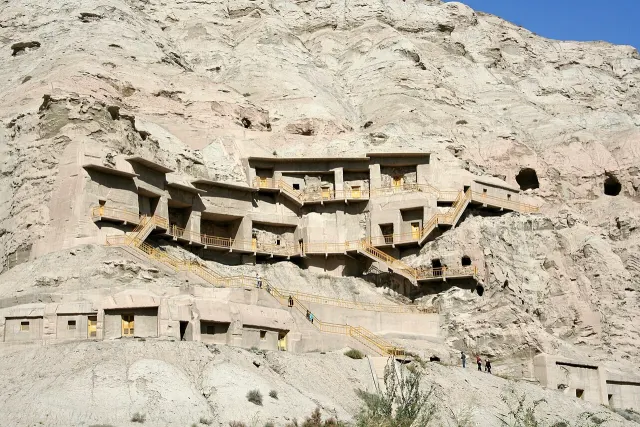
Because the roads ran through here. Millward writes that before national identities took hold, religion was one of several things that bound people together here, and lists Mahayana and Theravada Buddhism, Zoroastrianism, Nestorian Christianity, Islam and various Sufi orders living side by side. The Kizil caves near Kucha carried India's tradition of cutting and painting cave sanctuaries into Central Asia; their murals drew on Sogdia, Gandhara, India and Iran, but their striking greens and blues are Kucha's own. The Sogdians, who ran most Silk Road trade, were mostly Zoroastrians, though some became Buddhists and helped translate the scriptures into Chinese.
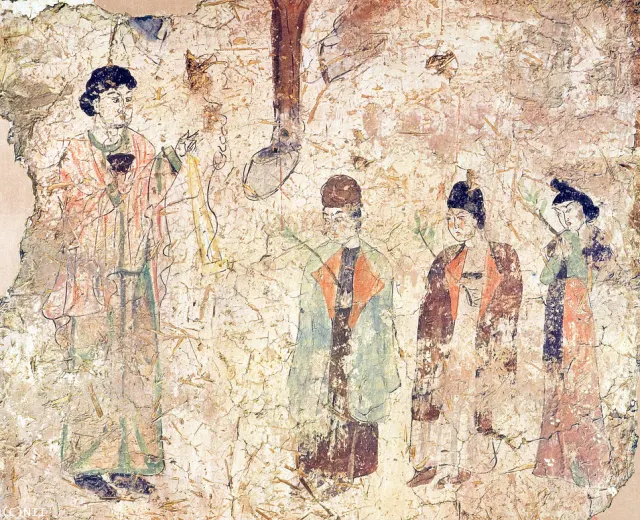
Rulers chose faiths too. In 762 or 763 the Uyghur khagan Bögü became a Manichaean after meeting Sogdians in Luoyang. After the Uyghurs moved to Turfan, the murals of Bezeklik and Kizil show them patronising Manichaeism, Buddhism and Nestorian Christianity at once. The Qara Khitay gurkhans were open-handed with every religion: Kashgar was a Nestorian bishopric, Christianity flourished on the Chu river and Judaism in Samarkand.
Sources: James A. Millward, Eurasian Crossroads: A History of Xinjiang (London: Hurst, 2007)
How did Islam become the faith of the land?
Slowly, over some five hundred years. The Karakhanid prince Satuq Bughra Khan became a Muslim in the 10th century and promoted Islam among his subjects; according to Islamic sources, the breakthrough came in 960, five years after his death, with the conversion of '200,000 tents of the Turks'. The war between Kashgar and Buddhist Khotan dragged on, and some time before 1006 Yusuf Qadir Khan of Kashgar took the city. Satuq Bughra Khan's shrine at Artush is still revered.
The east stayed Buddhist much longer. In the 1390s the Moghul khan Khizr Khwaja waged a holy war against 'Khitay' and took Turfan and Qocho (today Karahoja, near Turfan), but Buddhism did not vanish from Turfan at once: in the early 15th century its rulers sent embassies to Beijing led by Buddhist monks; the Timurid envoy Hafiz Abru, passing through in 1420, remarked on the richness and number of its 'idol temples'; only by the 1450s were mosques common enough to appear in travellers' accounts. When Islam reached Kucha is told in two different ways.
Sources: James A. Millward, Eurasian Crossroads: A History of Xinjiang (London: Hurst, 2007) · Chao-jung Ching, “Kucha”, Encyclopaedia Iranica (2021)
Events
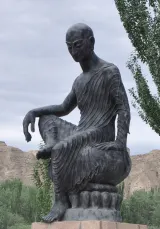 384Lü Guang takes Kuchabattle · Kucha
- ≈ 400The pilgrim Faxian in Khotanevent · Khotan
- ≈ 401Kumārajīva reaches Chang'anevent · Xi'an
- ≈ 620Sogdian traders in Gaochangevent · Qocho
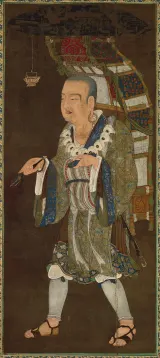 ≈ 628Xuanzang and the king of Gaochangevent · Qocho
- 644Xuanzang stops in Khotanevent · Khotan
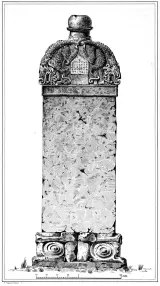 ≈ 762The Uyghur khagan becomes a Manichaeanconversion · Ordu-Baliq
- 840The Kyrgyz drive the Uyghurs from Mongoliafall · Turfan
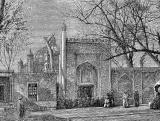 ≈ 932Satuq Bughra Khan becomes a Muslimconversion · Artush
- 960Mass conversion of the Turksconversion
- ≈ 981A Song envoy at the court of Qochoevent · Qocho
- 1006The Karakhanids take Khotanfall · Khotan
- 1145The legend of Prester Johnevent
- ≈ 1209The idiqut submits to Chinggis Khanevent · Turfan
- ≈ 1218Manichaeism loses its place in Qochoevent · Qocho
- 1218Küchlük and the Muslims of Khotanfall · Khotan
- ≈ 1333The Chaghatai khanate splits in twouprising · Ghulja
- 1347Islam reaches Kuchaconversion · Mazar of Molana Arshidinhan
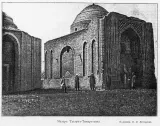 ≈ 1351Tughluq Temür becomes a Muslimconversion · Mazar of Molana Arshidinhan
- ≈ 1390Khizr Khwaja's holy war on Turfanconversion · Qocho
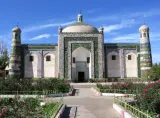 ≈ 1679The Dzungars take the Tarim oases and put Afaq Khoja in powerfall · Yarkant
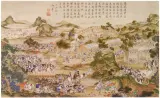 1826Jahangir Khoja takes Kashgaruprising · Kashgar
- ?The founding legend of Khotanfounding · Khotan
- ?The legend of the tree-born Uyghur kingsfounding